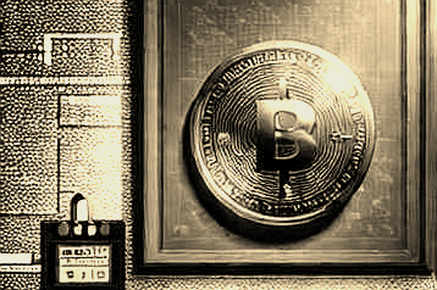
Speed kills. Precision saves.
But what happens when precision is weaponized against the very idea of permissionless exchange?
I spent three months in early 2017 auditing the smart contracts of EthicChain, a DAO that promised to democratize venture capital. I found twelve reentrancy vulnerabilities that could have drained $4 million. I published an open-source report, arguing that code is conscience. Back then, the threat was a bug. Today, the threat is a law.
On January 1, 2026, the clock runs out.
DAC8 — the EU's Eighth Directive on Administrative Cooperation — and its UK counterpart CARF (Crypto-Asset Reporting Framework) will force every centralized exchange and custodial wallet provider to collect your tax identification number, your name, your address, your birth date. If you refuse, your assets are frozen. Not a warning. Not a delay. Frozen.
This is not a regulatory nuance. This is the end of the peer-to-peer illusion.
Let me decode the skeleton.
Context: The OECD’s CARF, adopted by the UK, and the EU’s DAC8 are twin engines designed to replicate the Common Reporting Standard (CRS) for crypto. Under CRS, banks automatically swap information about foreign account holders. Now, crypto platforms do the same. The data fields are standardized: name, TIN, jurisdiction, transaction type, gross proceeds, and — most crucially — the residence of the counterparty. The first reporting deadline is 2027 for transactions occurring from 2026 onwards.
But here’s the sting that most analyses miss: the platform must collect identification for every user, even those who are not reportable. If you are a UK resident holding tokens on Binance EU, your data is collected regardless of whether the exchange route directs it to HMRC. The threshold is zero. The assumption of guilt is baked in.
And if you refuse? The platform must "cease the flow of funds" — block withdrawals, immobilize the account. Trust no one, verify the solitude.
Core: The technical architecture of compliance is a case study in moral imperative.
I have built data pipelines for DeFi protocols. I know what it takes to match 10 million wallet addresses to tax jurisdictions — it’s not elegant. It requires hooking into KYC databases, parsing self-reported addresses, and running fuzzy logic on IP geolocation. The cost runs into millions for any mid-tier exchange. The result is a surveillance infrastructure that is more intrusive than any blockchain explorer.
But the real engineering challenge is not technical. It’s sociological.
Consider the five scenarios outlined by HMRC: - A UK resident on a UK platform: automatic report to HMRC. - A French resident on a UK platform: report to UK, then swap with France. - A US resident on a UK platform: no CARF report (if US not a CARF partner), but data still collected? - A user with no TIN: frozen, unless they prove they are not a reportable person.
The asymmetry is intentional. The system is designed to maximize coverage, not fairness. The UK maintains a dynamic list of partner jurisdictions, updated as international agreements evolve. If your country is not on the list, your data sits in a black hole — but the platform still holds it. Sovereignty is outsourced to a database.
Audit the algorithm, not just the code.
Contrarian: I have to recognize the somber reflection on hubris here. For years, we shouted "Not your keys, not your coins." But we never asked: What happens when the key is your tax ID? The peer-to-peer dream died not with the ETF approval — it died with the first enforcement of DAC8. Bitcoin became Wall Street’s toy. Ethereum became a settlement layer for compliance tokens.
Yet I see a blind spot in the narrative. The same forces that concentrate power in Coinbase and Kraken also create the opportunity for genuine decentralized alternatives. A true DEX, with no KYC and no front end, cannot collect tax IDs. It is invisible to DAC8 because there is no "provider" to regulate. The protocol itself is a mathematical object. If you run a node, you are not a reporting entity. The regulators know this. They will come for the software providers next. But for now, the gap exists.
Speed kills. Precision saves. The speed of regulatory capture is breaking records. The precision of protocol design is our only shield.
I recall my six-week solitude in a Bali cabin after Terra’s collapse, analyzing 50 failed protocols. The pattern was always the same: hubris masked as innovation. The yield was a promise broken. Today, the promise of tax-free crypto is also broken. But that does not mean the principle of self-sovereignty is invalid. It means we must build systems that cannot be coerced — systems that separate identity from transaction, that use zero-knowledge proofs to prove compliance without revealing the underlying data.
Takeaway: The DAC8 regime is not an external threat; it is a mirror. It shows us how far we have drifted from Satoshi’s vision. The real audit we need is not of the code, but of our own surrender. Trust no one, verify the solitude.
Silence is the loudest warning.
We have two years. Will we use them to retreat into compliance, or to build a new layer of agency?
The answer will determine whether blockchain remains a tool for liberation — or becomes just another ledger for the tax collector.